



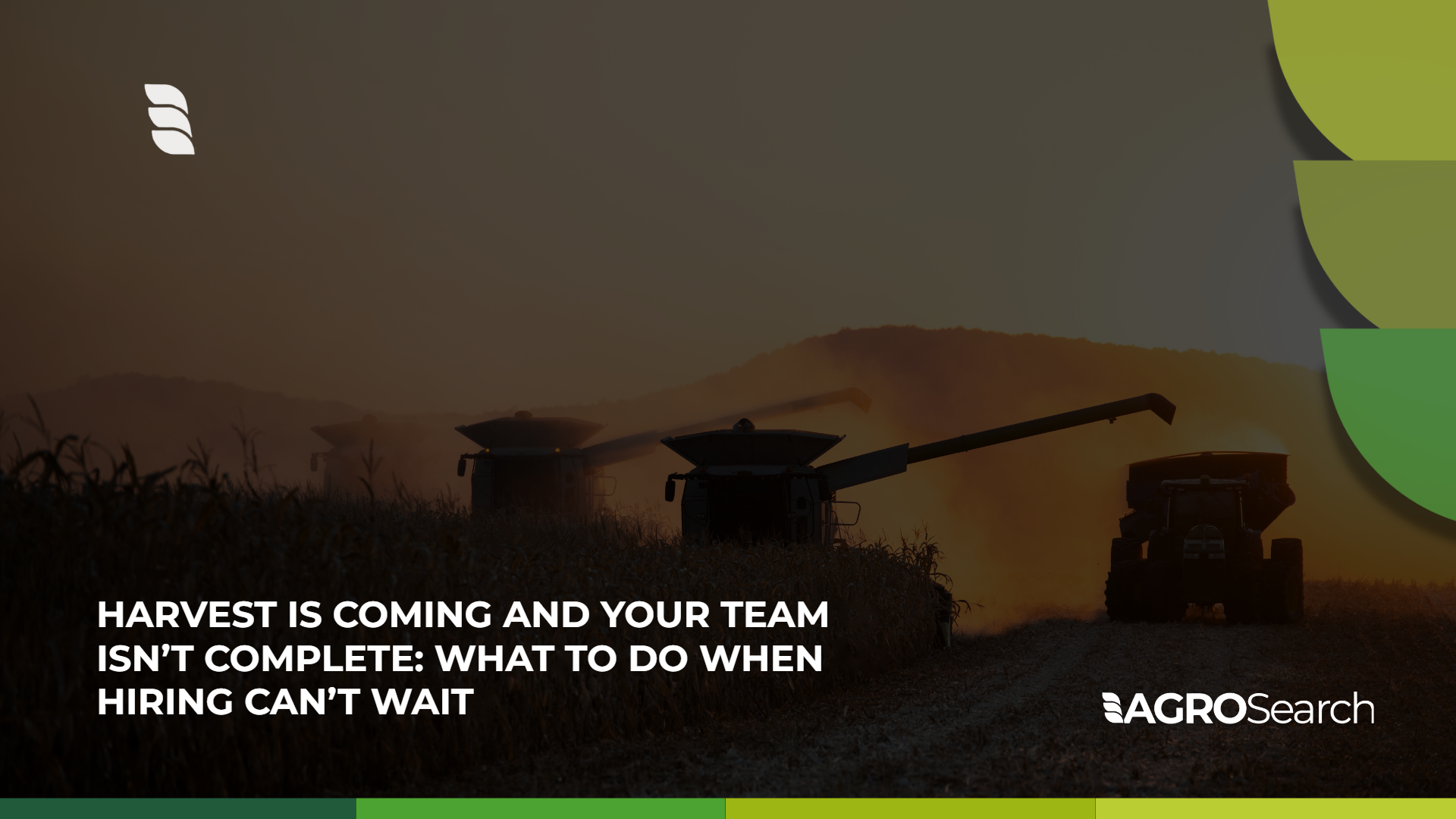
Harvest season is coming. The plan is set, the machines need to run — and important positions are still open.
For those leading the operation, the concern goes beyond filling a vacancy: who will take over the work while the new professional hasn’t arrived?
Redistributing tasks may help for a few days. But as demand increases, the team feels the overload, the manager piles up responsibilities and the plan becomes harder to execute.
That is when urgent hiring in agribusiness stops being just an HR request and becomes an operational priority.
The cost of an open position shows up in the daily routine
Not every impact of an incomplete team shows up right away on the spreadsheet.
It can appear as overtime, postponed activities, leaders who have to cover a role, or difficulty organizing shifts. Those already on the job take on more work precisely when the operation demands the most attention.
The manager faces a tough decision: they need to hire fast, but cannot give up the criteria that make a good hire.
The way out starts with adapting recruitment to the deadline and to the reality in the field.
What to prioritize when time is short
Before broadening the search, HR and operations need to align on three points:
- Which positions are most critical? Identify the roles whose absence most compromises the start or continuity of activities.
- What is essential for each role? Separate the requirements needed from day one from the skills that can be developed.
- How will the decision be made? Define who interviews, who approves and how long each stage can take.
It is also essential to present the real conditions of the opportunity from the first contact: work location, schedule, pay, expected start date and, when applicable, transportation and accommodation.
This information helps prevent the process from moving forward with candidates who are not available or not interested in the conditions offered.
When recruitment needs to be close to the operation
In periods of higher demand, posting a job and waiting for applications may not be enough.
The search must be intensified, with a clear understanding of the hiring context: the region, the availability of professionals and the needs of those running the operation.
This is where a dedicated recruitment team can support your company.
With a dedicated project team, AGROSearch brings recruitment closer to the reality of the business and to the leaders responsible for the team, wherever the operation is.
This proximity makes it possible to align the search with the company’s context: which roles need reinforcement, which requirements are essential and what conditions professionals will find day to day.
For the manager, this means having dedicated recruitment support at a time that already demands constant attention to the operation.
Gaining speed requires focus and clear criteria
As harvest approaches, the pressure to fill positions increases. But hiring someone without assessing their experience, availability and fit for the role can create rework exactly when there is less time for it.
Speeding up recruitment requires a targeted search, clear communication and decisions without unnecessary delays.
Urgency should shape how the process is organized — without replacing the selection criteria.
That is why the company’s involvement remains essential: giving feedback on candidates, keeping the job conditions aligned and making leaders available for interviews helps recruitment move forward.
Harvest has a deadline. Building the team must be a priority too.
Planning hires in advance is part of harvest planning. When the need is already urgent, the first step is to identify the critical positions and mobilize the support needed to fill them.
AGROSearch brings recruitment and operations together, with dedicated teams to help companies build and complete their workforce.
Harvest is coming and your team still isn’t complete?
Talk to AGROSearch about the positions and deadlines of your operation and find out how we can support your hiring.