




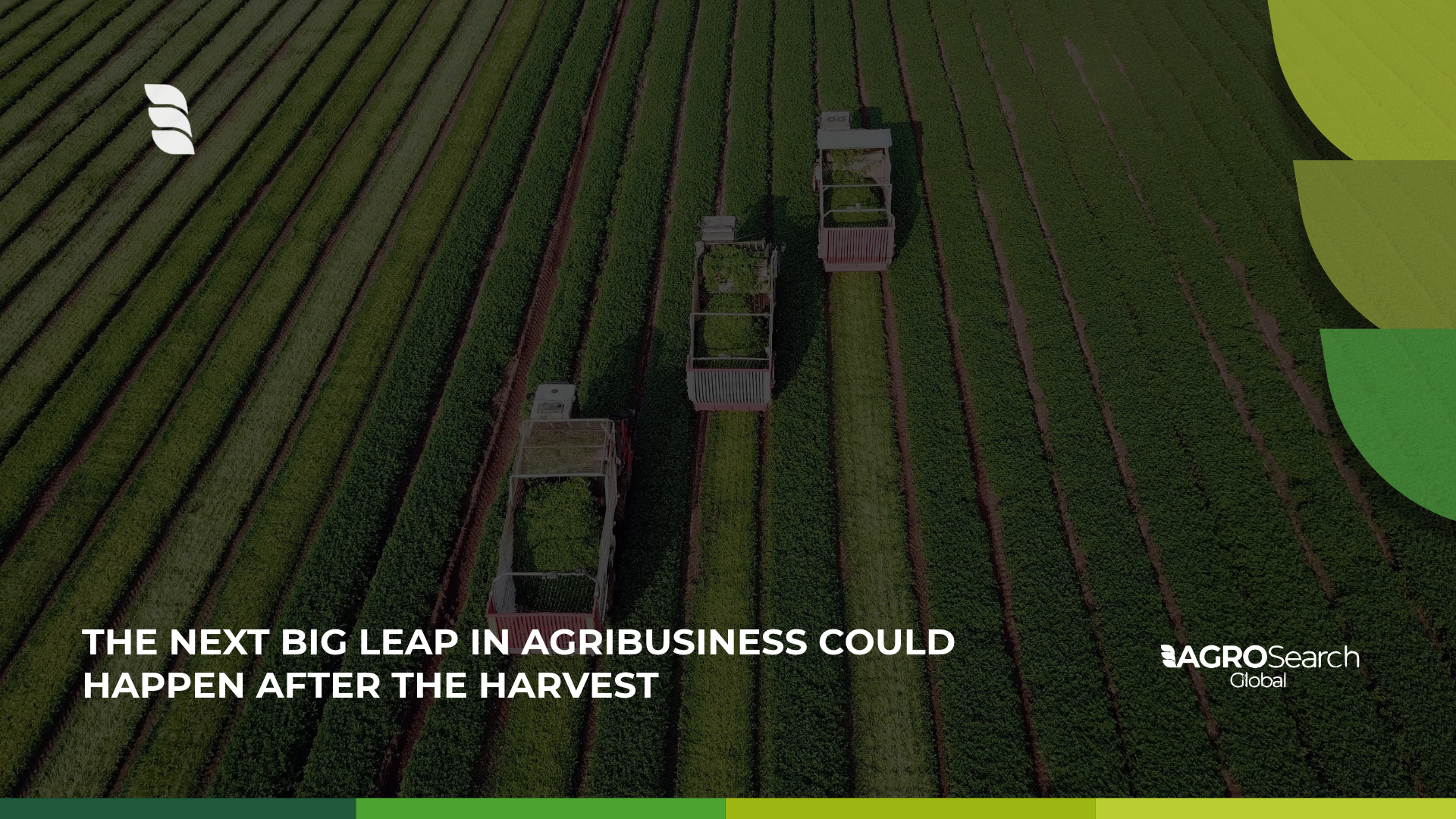
Storage, industrialization, processing, and logistics are becoming increasingly important as agribusiness seeks to turn productivity into competitiveness and new business opportunities.
For decades, agribusiness growth has been closely associated with expanding production, increasing productivity, and adopting new technologies in the field. These factors remain essential, but one question is becoming increasingly important: what happens to agricultural production after it leaves the farm?
Between harvest and the final consumer lies a complex network of storage, transportation, processing, industrialization, and commercialization. Along this journey, a significant portion of a product’s economic value can be preserved, increased, or lost.
For companies seeking to remain competitive in global markets, efficient production is only part of the challenge. The ability to strategically store, transform, and commercialize agricultural output may represent the next stage of agribusiness growth.
Growing Production Requires an Increasingly Prepared Supply Chain
Global agribusiness continues to show prospects for expansion. According to the OECD-FAO Agricultural Outlook 2026–2035, global agricultural production is projected to grow by approximately 13% over the next decade, driven primarily by productivity improvements and the intensification of production systems.
This outlook highlights the importance of investments that support production growth and enable products to reach markets efficiently, competitively, and with consistent quality.
After all, expanding production capacity without developing the infrastructure needed to store, transport, and process agricultural products can create limitations for the industry’s own growth.
The challenge is no longer simply to produce more. It is also to strengthen the entire value chain to make better use of what is produced.
Storage: A Strategic Decision Beyond Infrastructure
Storage plays a strategic role in organizing agricultural and agroindustrial supply chains.
Adequate facilities help preserve product characteristics, reduce the risk of losses, and provide greater flexibility for logistics and commercial planning.
In grain markets, for example, storage availability can influence decisions regarding crop movement, inventory management, and the timing of sales.
In fruit, vegetable, and animal-product supply chains, preservation, refrigeration, and transportation conditions are essential for maintaining quality and meeting market requirements.
The importance of these structures is also reflected in international indicators. According to estimates from the Food and Agriculture Organization of the United Nations (FAO), 13.3% of food produced globally was lost in 2023 during the stages between harvest and retail, including transportation, storage, and processing.
This figure demonstrates that agribusiness efficiency cannot be measured exclusively by results achieved on the farm.
Investing in storage also means investing in planning, operational management, technology, and the ability to respond to market needs.
Industrialization and Processing: Turning Production into New Opportunities
Industrialization represents another important dimension of agribusiness development.
When raw materials undergo transformation processes, opportunities emerge to diversify products, make use of by-products, and participate in different markets.
Soybeans, for example, can be processed into meal, oil, and other derivatives. Corn can supply animal feed chains, industrial processing operations, and ethanol production. Livestock production, in turn, is connected to various processing, preservation, and distribution activities.
These activities expand business possibilities and may encourage investment in industrial plants, distribution centers, energy infrastructure, and technological solutions.
However, adding value does not simply mean industrializing every agricultural product.
Companies must evaluate factors such as raw material availability, demand, production scale, operating costs, access to energy, logistics infrastructure, and economic feasibility.
The real opportunity lies in identifying situations where industrial transformation effectively strengthens a company’s competitiveness.
Logistics Connects Production Potential to Consumer Markets
In an increasingly interconnected global agribusiness environment, logistics plays a decisive role.
The distances between producing regions, industrial centers, ports, and consumer markets require careful planning and coordination across different operations.
The projected expansion of global agricultural production further reinforces the importance of developing logistics networks capable of supporting that growth.
For companies, this involves decisions about facility locations, integration of transportation modes, inventory management, distribution, and relationships with commercial partners.
An efficient production operation can lose competitiveness when facing high logistics costs, delays, or infrastructure limitations.
Conversely, companies that successfully integrate production, storage, processing, and distribution can develop more efficient operations that are better prepared to serve different markets.
New Investments Also Transform Business Structures
The development of post-harvest activities involves more than constructing new facilities.
Implementing a processing plant, expanding storage capacity, or establishing a logistics center can also change how companies are organized.
These projects involve financial planning, industrial management, maintenance, safety, quality control, procurement, technology, and business development.
As operations become more complex, the need to integrate departments that may previously have worked more independently also increases.
Management requires a broader understanding of the business, from raw material availability to final product delivery.
In this context, efficiency depends not only on infrastructure investment but also on the ability to organize processes and bring together specialized expertise.
Agroindustrial Growth Increases the Importance of Specialized Professionals
Changes across agricultural value chains are also creating new demands in the labor market.
Industrial and logistics expansion projects may require professionals with specific experience in several areas:
-
Industrial Management: production planning, operational efficiency, maintenance, and continuous improvement.
-
Storage and Logistics: inventory management, storage operations, transportation, and distribution.
-
Engineering and Projects: facility implementation, automation, infrastructure, and process optimization.
-
Quality and Safety: process control, technical compliance, and operational safety.
-
Procurement and Commercial Operations: negotiation, purchasing planning, supplier management, and market development.
-
Strategic Management: operational integration, investment analysis, and new business development.
These specializations demonstrate how agribusiness offers professional opportunities that extend far beyond activities directly related to agricultural production.
They also reinforce the importance of understanding the characteristics of each segment when identifying professionals for technical, commercial, and management positions.
The Importance of Understanding the Entire Agribusiness Value Chain
For companies expanding their operations, understanding the competencies required at each stage of the business is essential.
An industrial plant faces different challenges from those of a commercial operation or a storage facility. Likewise, the needs of a logistics company may vary significantly depending on the products transported, the regions served, and the markets involved.
In this environment, specialized agribusiness knowledge becomes particularly valuable in recruitment and selection processes.
At AGROSearch Global, we work across different segments of the agribusiness value chain, connecting companies with professionals whose experience and competencies align with the specific characteristics of each operation.
Our industry expertise helps us understand organizational challenges and support the identification of talent across technical, operational, commercial, and strategic areas.
Beyond following agribusiness growth, we seek to understand how industry transformations influence companies’ needs and the evolution of the professional talent market.
The Future of Agribusiness Will Also Be Built Beyond the Farm
Productivity growth will remain one of the foundations of global agribusiness. However, turning that growth into sustainable results requires attention to every stage of the value chain.
Storage, processing, industrialization, and logistics are not merely complementary activities to agricultural production. They are strategic components that influence efficiency, competitiveness, and access to new markets.
The next major leap in agribusiness may lie precisely in integrating these structures, expanding processing capacity, and developing businesses that make better use of the industry’s productive potential.
And behind this evolution will be professionals capable of planning, implementing, operating, and developing increasingly specialized facilities and operations.
Because the value of agribusiness lies not only in what it produces, but also in its ability to transform that production into opportunities.
AGROSearch Global follows the evolution of agribusiness and connects companies with the talent that contributes to the development of their operations.
While agribusiness moves the world, we move agribusiness!
Discover our specialized recruitment and selection solutions for agribusiness:
Empresa de Recrutamento e Seleção no Agro | AGROSearch